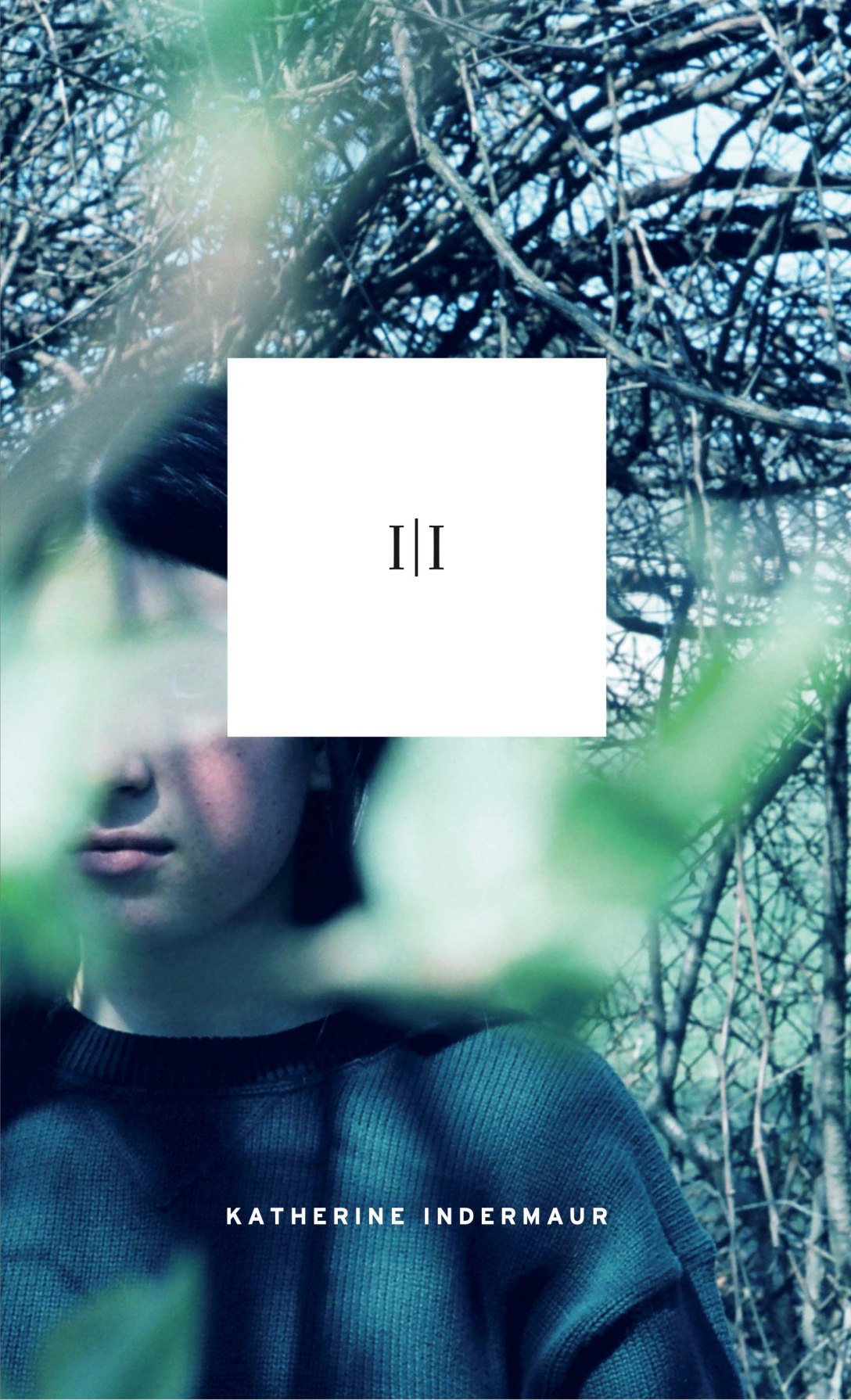
Katherine Indermaur’s serial lyric essay I|I (Seneca Review Books, 2022) weaves her personal experiences relating to mirrors with reflections from history, science, mythology, religion, philosophy, and art. I|I is the winner of the 2022 Deborah Tall Lyric Essay Book Prize and the 2023 Colorado Book Award.
Interviewed by Jacob Taylor.
::
JT: First, I think it would be great to get to know you as a person. Could you tell us a little bit about yourself?
KI: Sure. Thank you for having me, and thanks for taking the time to think about my book. I originally grew up on the East Coast, mostly North Carolina and Georgia. My family’s from North Carolina for the most part, and then, 10 years ago, I moved to Wyoming and have been out west ever since. I’ve lived in Utah, Wyoming, and Colorado. Colorado is where I am now. I studied English and creative writing in school and got my MFA in poetry from Colorado State University in 2019. I went to the University of North Carolina for undergrad. I’ve just always been enthralled with literature, always been enthralled with storytelling and tried to do that from a very young age. I’m really excited to have a book out in the world! I think of myself primarily as a poet, and these days, I spend a lot of my time taking care of my 11-month-old. But I’ve spent some time rock climbing and camping and being outside, and that’s one of the main things that brought me to the Rocky Mountains.
JT: I|I relies heavily on etymology and makes references to art, history, mythology, technology, and fairy tales. What was your research process like for this book? And how did you navigate including such a diverse set of information in a single work?
KI: I saw a tweet once where somebody was complaining about poets who have giant notes sections at the ends of their books. They were like, “Oh, they think they’re so fancy with their, like, eight pages of notes.” But that’s me. Yeah, lots of research.
The book didn’t start out that way. I started out just being interested in mirrors and the psychology of mirrors and my personal experience with them. But as I got to a certain length of text, I was like, I really need to know what I’m talking about, you know? I need to have some more historical knowledge, some more cultural knowledge, so I really took the opportunity to just follow my curiosity. So that’s where you see a lot of the etymology that you mentioned getting explored. Every time I thought, “Huh, I wonder what that comes from.” I was like, “Well I’ll just do that work right now. I’ll step away from the text and look that up.”
When I was in graduate school, I did a lot of editing, and that’s something that I learned from the editorial processes. I have absolutely no shame. I look up words constantly in the dictionary—like, “Is that really the right word? Am I using that correctly?” I do that all the time now. Whereas I think, graduating as an English major, I used to think, “I should know the words.” Now I’m think, “Oh, yeah, I don’t.” I know how to use the tools, but I don’t know the words. So anyway, I did a lot of that for the etymology.
And then for the actual topic of mirrors itself, I spent a lot of time very intentionally researching mirrors and finding texts that delved into history and different uses of mirrors. I watched a PBS produced video about the history of glass—all this kind of stuff, very specifically looking for different threads that I could follow in the text myself. I would spend time with a research text or video and take notes, and then those notes became other notes that eventually became the book.
JT: But I do have to say, it’s my favorite thing when I reach the end of a book—when it’s a book I wouldn’t expect to have a lengthy note section, like a novel—and there it is! That’s one of my favorite things. I love a good notes section.
KI: Good! I’m glad we’re on the same page there.
JT: While reading I|I, I noticed a lot of religious and mythological references. Could you share how you came across these connections to mirrors and what they’ve come to mean for you or your writing?
KI: The religious connection is really a personal one. My personal text is the Christian Bible. For me, that has a lot of the stories I go back to when I try to make sense of the world or even when I’m just trying to make sense of my own psychology: “Why do I feel shame about this thing? And why do I feel protective of this other piece of me?” A lot of that comes back to Sunday School and what I was taught about that text. And to think about our western American cultural psychology around self-image, it made sense to think about the Bible. It felt honest for me to do that.
As far as mythology goes, at the same time that I was doing all this research, I was also thinking: “Okay, what are the sort of cultural touchstones for mirrors? What do we think about? Where do they appear in our culture?” And the myth of Narcissus was up at the top. And it was really fascinating to me that we have such ancient stories about mirrors, even though in human history, mirrors are still a relatively new technology. They’re only ubiquitous now. So I found it really interesting that in the oldest stories we tell ourselves about our culture and society, there they are. They seem like they’re as old as we are. So I went back to a lot of those old stories in the same way that I was looking at etymologies, just digging through the ancestry of things and trying to look at origins—looking through all the time that I could, to see how meaning has changed, how purpose has changed, and also ways that it hasn’t. Or how history has been informed by the way mirrors were believed in or used and how we inherited these things.
JT: Reading through some of the other interviews that you have done, I read you mention a few things in the Mormon temple. I grew up in a Mormon household, and my dad, in one of our bathrooms, he installed these parallel mirrors because they have parallel mirrors in the temples that are supposed to represent eternity. So I grew up with those mirrors. I would stare at them for hours; they would just create this weird sensation where the reflection is going off and curving off into nowhere, into infinity. So your book really brought me back to that memory because that’s the first thing I remember about mirrors. It was just in my bathroom, but it had a deep religious meaning.
KI: That’s so fascinating. I’ve never been in a temple, and I’m not LDS, but I just knew about that use of the mirror. And when you say that it was in your bathroom, I feel like that’s the gravitational center. I feel like that must have felt like a very heavy place in the home, from my perspective. So interesting. I would have also been very interested in that as a kid.
I looked it up relatively recently and now I can’t remember, but for a while there was a traveling art exhibit that was popping up in big cities that had a lot of mirror illusions, like infinity mirrors, and people were posting a lot of selfies of themselves in those. Now that’s what I think about when you say that. Selfies in front of these infinity mirrors.
I’m also struck by how you say that it feels like it goes to nowhere. Like, yes, it’s infinite. But it goes. And then it also goes to a place that feels like it travels into a void, or it travels into nothingness.
JT: As a kid, I would try to make my other selves do things in the “nowhere.” I think it’s just really fascinating. I believe you’ve described the “practices” sections of the essay as the idea that binds everything together, similar to how Maggie Nelson’s Bluets follows the color blue. Can you explain how these practices arose? Some of them seem very ritualistic. Did you do any of them before you started writing, or did they arise out of the writing process?
KI: They arose out of the writing process. I did do some of them, and I think of them as a way to reckon with how the body comes up in the book because on its face, the project of the book seems like a very intellectual one. Where do mirrors come up? And why do they, why do we—Like, let’s take a step back from the actual experience of standing in front of a mirror and just think about it, right? I wanted to reckon with that origin of “No, this is very much having to do with, not just the eyes and how we see and how our bodies take in light, but also having to do with the body and the physical experience of perceiving the body, as outside the self.”
You were right to pick up on them feeling ritualistic. I was very interested in the idea of ritual as a potential place for healing, especially physical healing. I think, all too often, our culture likes to separate mind and body. We say things like, “Oh, mental illness is something you sit and talk about, or take a pill for.” But I think we’re starting to learn, especially, you know, through the pandemic, that you can’t isolate mental illness from physical illness, or at least physical presence, so any healing that happens psychologically also happens in the body—on the skin, you know, for somebody like me with dermatillomania. So I really wanted the practices to be opportunities for the reader to step back from the intellectual exercise of the text and feel more embodied. Not that in order to have read the book correctly, you have to have done all these things. It’s not about that. It’s more about just engaging with the text in another way.
JT: While reading your book, I kept picking up on conversations about mental health. How did you navigate writing about these subjects, and how would you place your book within those conversations?
KI: This is tough for me because I’m not, you know—I feel a little bit more like an expert about mirrors. Writing this book, I do not in any way feel like a mental health expert. That part is very much rooted in my own experience. But you’re right to point to it because very central to the book is this contradictory grappling with how does one heal from something like a mental illness that’s not acute, right? If you fall down and break your arm, that’s very painful, but it heals. And then you have an arm that works again, the way that it worked before it was broken for the most part. But if you have a mental illness, sometimes that can be acute. People suffer trauma, and some people really do just heal from that trauma and are able to feel some sort of closure, but I think, much more common is the experience of being diagnosed with something—personality disorder, bipolar, manic depression, or anxiety, and that’s my life now. So now what? There’s not a time-bound sense to the diagnosis. So what does healing look like? Even if you’re able to take a pill that fixes the symptoms, there’s still the sense that the brain itself functions in a way that’s harmful to the person.
I don’t have an answer to that question, but that’s something that I feel is really core to the book, that is the sense of what is wellness, what is healing when the brain or the body just tends toward harm or tends toward things perceived as harmful? I think that that brings up a lot of other questions that the book also addresses or tries to address. What implications does that have for things like acceptance, self-love, self-image?
JT: I think those questions are difficult to answer, but I definitely see this book as an experience where the reader is supposed to engage with these ideas and questions.
I also love the way your use of punctuation progresses throughout the book. As I read, I started seeing the words following the vertical slash as a reflection stalking the narrator. The visual effects of the overlapping words, parentheses, and spacing near the end of the book felt especially effective. Can you talk about what drove your decisions with these elements?
KI: Sure. I very early on started using the vertical slash. Primarily, it felt like a way to bring the mirror surface into the text itself, and I thought that was pretty exciting. Then, still relatively early on, before I really had a sense of trajectory for the text as a book length manuscript, I developed a trajectory for the punctuation, which is, like, a very poet thing to do. I thought, “Okay, the plot is going to do this thing.” But that movement happens with how I use the vertical slash, and then the vertical slash becomes letters overlapping each other, and then that becomes weird things with spacing and with grammar. I had a sense of that movement before I had any other sense of how I should order this text, before I even knew that the practices were going to be interspersed or anything like that. So that became something that I had to follow as a writer: “Okay, why does this feel right to me? And how can I support that echo, do that similar kind of work in the text aside from just the punctuation?”
We started out talking about notes. There’s also a note in the back about the use of that vertical slash and different ways to think about it, and I felt it was important to give that information to the reader but not until, you know, after—to give them the opportunity to read the text without saying, “Here’s the history of the vertical slash. Here’s how to read the book.” I started using it, and then realized it was becoming really central to a lot of the book’s concerns. I thought I’d better do my homework on this and see if there are any other pieces of this history that I can put together. Initially, I was most excited about the punctuation. That excitement drove me into other places for the book.
JT: I really appreciated that element in the book. When something works on a visual level, and on a grammatical level, it makes it that much more powerful. For me to see this visually, and then I can look back from the notes section and see, “Oh, all along, this is what the vertical slash means, and this is how parentheses work in math! I wasn’t thinking about math here.” But then I can go back in and read again thinking about math. For me as a reader, another meaning enters the book after you see that. I think it’s really clever.
KI: Thank you! And I hope it also speaks to the fallibility, that it leaves room for hope in the way we look at things, too. That feeling of, “Oh, yeah, I looked at this page; I know what it says; I understand it.” But then you get one little hint of something later, and you think, “Oh, I look at this in a completely different way, and both of those ways are valid and interesting and have their merits.” I love that about poetry generally, but about all kinds of art, too.
JT: A couple of times, you bring up this idea of “Subject|Object” and show how, when isolated from others, we become objects rather than subjects, which I found really interesting. I love thinking about how these words interact with each other now that you’ve posed them this way. Can you talk about this relationship more?
KI: The language for subject and object came to me originally from two different places. Early on in the book, there’s this passage about a—and I think it might be where that language first comes up too—there’s a passage about a museum that has on display paintings done on mirrors. I was thinking about the subject of a piece of art, but then also, as I was doing research about the psychology of mirrors, you know, subject is a term widely used in psychological studies: the subject of the study is doing this, the subject does that. And so then, that very quickly led me to think about objectification, subjectivity, about how being viewed turns a subject into an object, but viewing turns one into a subject, and then—like you said—what isolation does to that paradigm. I felt like that dichotomy was a useful way to think about vision for the book, but also a good way to sort of explain the experience of being triggered by a mirror in a terminology that’s widely accepted and understood, to be able to say, “Yeah, I go about my day feeling like the subject, but as soon as I have access to my own reflection or my own image, that’s objectifying.” When we say that, there’s a whole other cultural understanding of what that means that I find to be really useful.
JT: As someone who has published a long-form lyric essay—I believe you’ve described it as a serial lyric essay before—do you see this subgenre growing in popularity?
KI: I think so. It’s been around for a while, for at least fifty years, but I think that especially with the real commercial success of Claudia Rankine’s Citizen: An American Lyric, we saw that it was actually quite an accessible form, even though it’s considered—even within like the creative writing communities—experimental and hybrid. And, you know, outside the creative writing community, people read novels. But with the success of Citizen, I feel like people were reckoning with the systemic police brutality that people of color and particularly Black people experience in this country, and the lyric essay could speak to that pain and to validate it and not minimize it, to really honor the pain that I think is so powerful and needed.
To me the lyric essay feels very expansive, and I think we’re living in a time that feels very overwhelming. I mean, we talked about mental health, but there are all these crises happening at global scales that you and I have very little control over, very little say over, but they’re having a huge impact on our lives. The way we think about how our lives are meaningful or not—all of this. I think it’s a really useful form in that it can hold all those things. I’m thinking about Erica Trabold, who won the first Deborah Tall Lyric Essay Book Prize, which is the same prize that my book won. She just co-edited an anthology called The Lyric Essay as Resistance.
I just think these texts are really demonstrating the lyric essay not just a useful form for social movements, but also as a place that’s very expansive. Hybridity is uniquely inclusive. Some of my favorite lyric essays are by people who are on the margins in terms of gender or in terms of ethnicity, socioeconomic class, physical ability, mental ability, and neurodivergent people. So I’m really excited about the lyric essay. I love the form. I love writing it, but I think I actually love reading it more than I love writing it.
JT: What writing can we look forward to seeing from you in the future?
KI: That’s such a nice way to ask that question. That’s lovely. I am working on two projects. One that’s pretty well underway at this point is a series of poems about the historical figure Egeria. She was a fourth century A.D. Christian pilgrim who traveled from Western Europe somewhere to Jerusalem, and she was the first woman known to climb Mount Sinai. She did a bunch of cool stuff, and some of her original Latin writings have survived to today, so there are some translations available. I just think she’s a really interesting figure, and I’m really drawn to the Desert Fathers and early Christian mysticism and that story. So that’s one project, and I’m currently still working on some of those poems, and some of them have been published.
And then one project that’s very, very new and I’m still just figuring out what to do with it. I think that language acquisition is really interesting, so basically that’s a fancy way of saying that my daughter is learning how to talk, and I’m thinking about how communication works with somebody before they’re capable of speaking, how we acquire speech and what happens with learning how to talk, like what that does to our relationships and our psychology. I basically just have a very long note in my phone all about it that I add to when I have little moments, or new thoughts. So that may end up sort of lyric essay-ey. We’ll see.
::
Katherine Indermaur is the author of I|I (Seneca Review Books), winner of the 2022 Deborah Tall Lyric Essay Book Prize and the 2023 Colorado Book Award, and two chapbooks. She serves as an editor for Sugar House Review and is the winner of the Black Warrior Review 2019 Poetry Contest and the 2018 Academy of American Poets Prize. Her writing has appeared in Ecotone, Electric Literature, Frontier Poetry, the Journal, New Delta Review, Ninth Letter, the Normal School, and elsewhere. She holds an MFA from Colorado State University and lives in Fort Collins, Colorado.
Jacob Taylor is a queer writer based in northern Utah, where they are currently completing an MA in creative writing at Utah State University. They write in all genres and have a special love for experimental forms.
Image description: Cover of Katherine Indermaur’s I|I. Cover image shows a dark haired young person surrounded by branches and leaves. Their face is partially obscured.
 Psaltery & Lyre